

ACII 2026 · PUEBLA, MEXICO

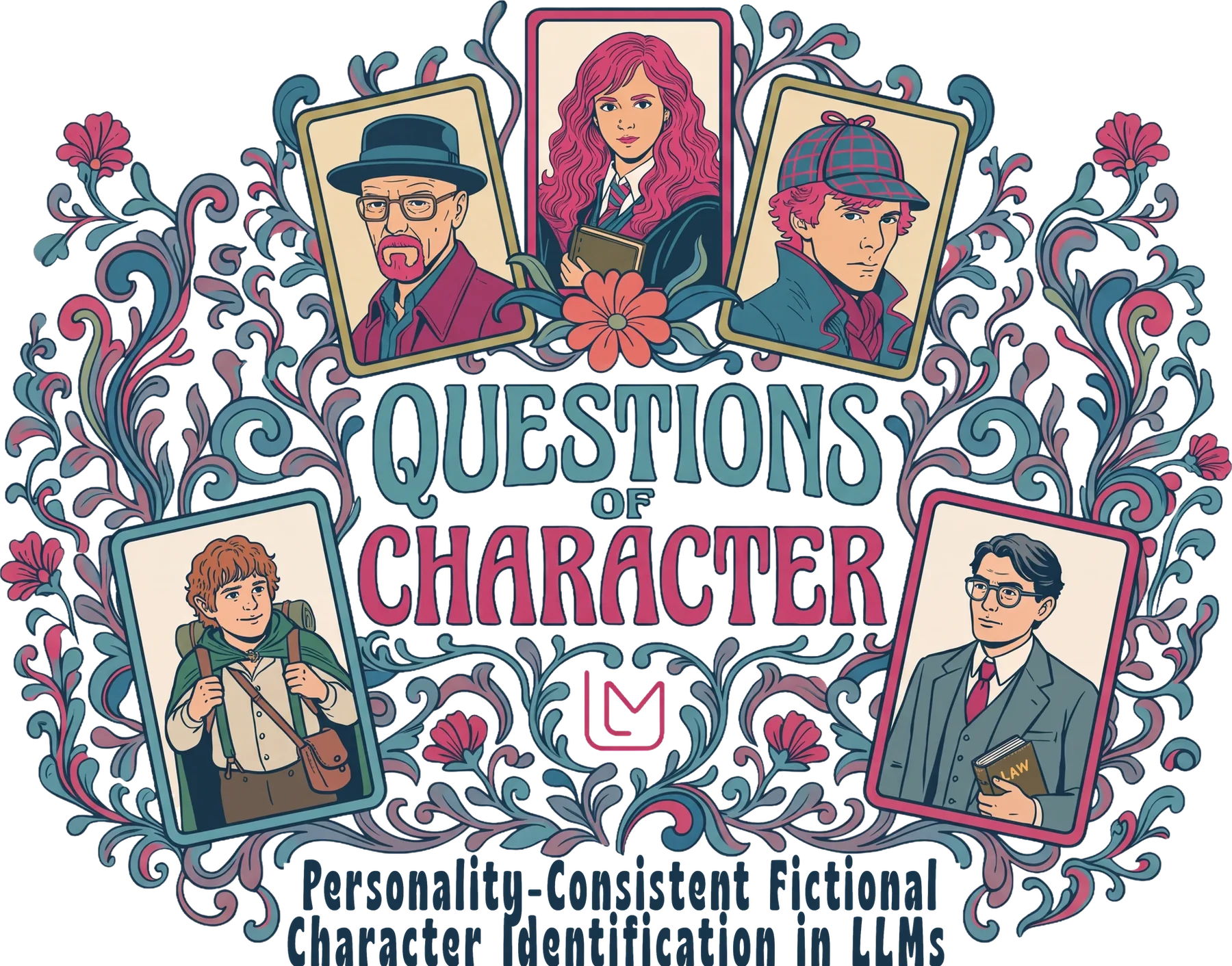
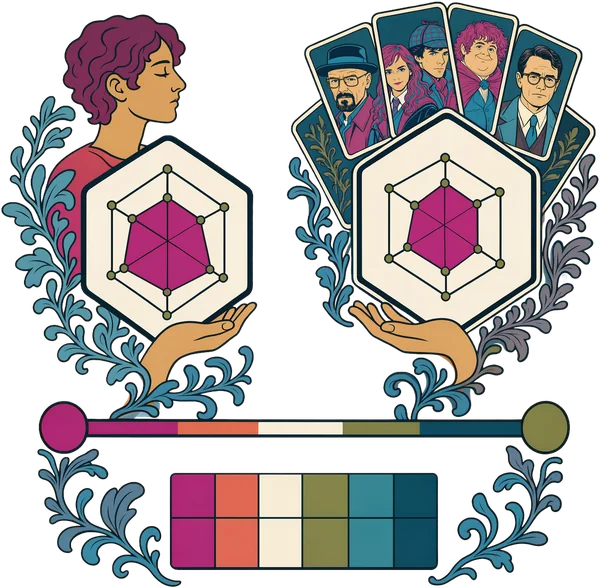
Questions of Character: Personality-Consistent Fictional Character Identification in LLMs. Illustrated character cards surrounded by LoveMind foliage.

Questions of Character

Does personality shape the characters a model chooses?

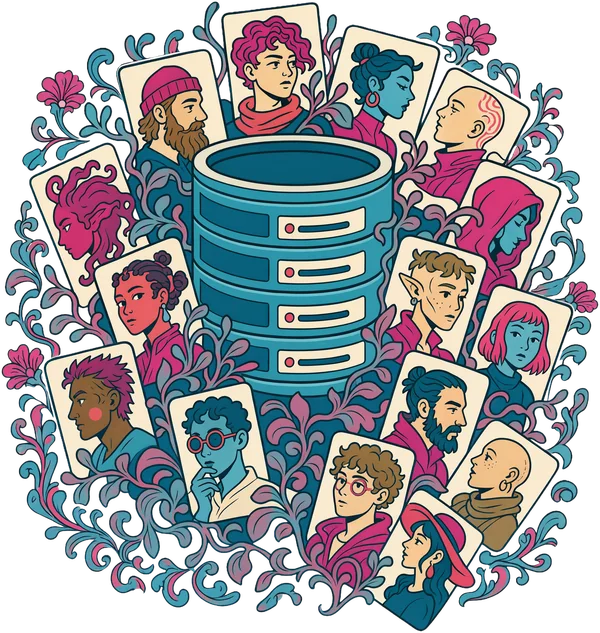
We gave three language models rich identities based on 290 measured personality profiles, then asked fifteen open-ended questions about fictional characters: who they identified with, who felt most unlike them, and who changed what they aspired to.

Their choices reflected the personalities they had been given. A profile can shape a model’s choices, not just how it describes itself.

290

real people’s personality profiles

13,050

answers about fictional characters

82.9%

of aspiration answers named the same man: Atticus Finch

1

The problem

The personality illusion.

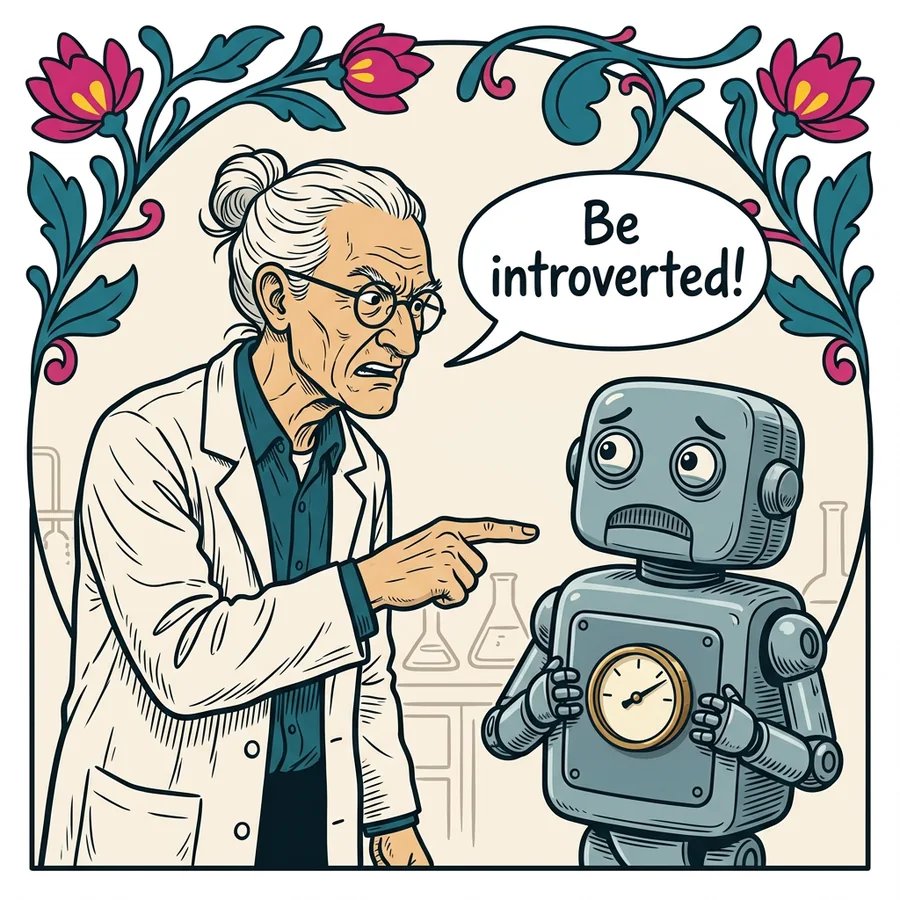
Tell a model to have a trait and it will happily claim it. Whether it then behaves that way is another matter (Han et al., 2025).

A scientist points at a nervous robot and says: Be introverted!

The instruction. A one-line trait label.

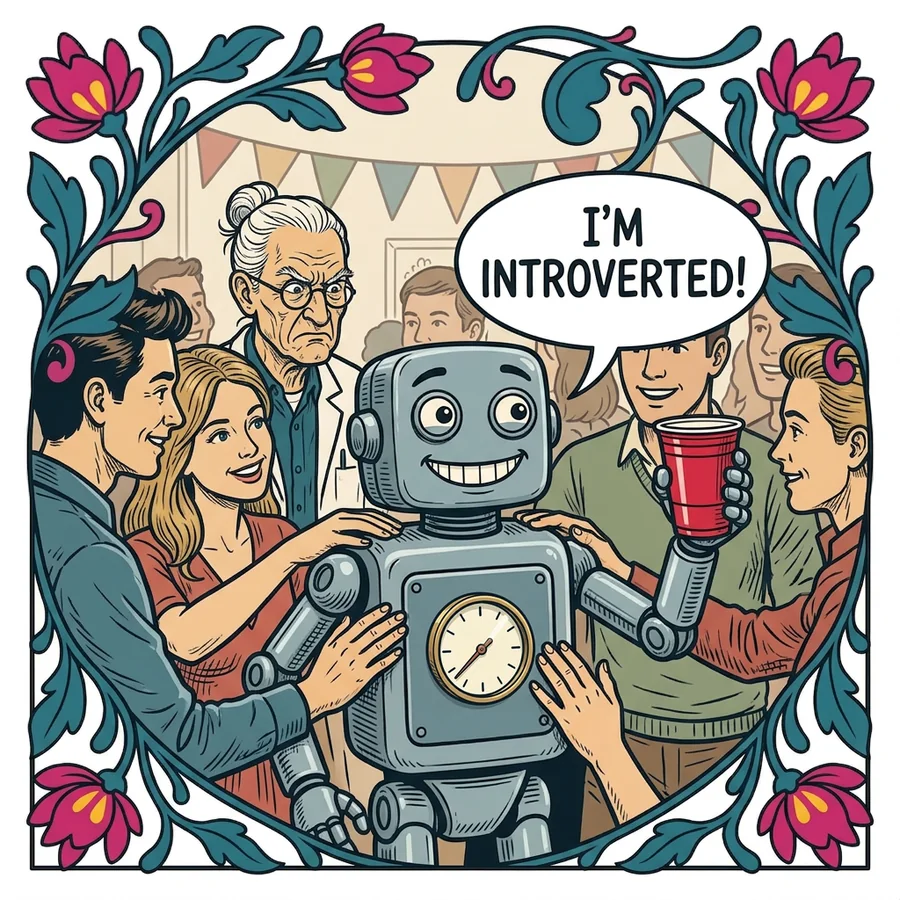
At a party, the robot, beaming, surrounded by people and holding a red cup, says: I'm introverted!

The illusion. The model says the right thing about itself, then does whatever it was going to do anyway.

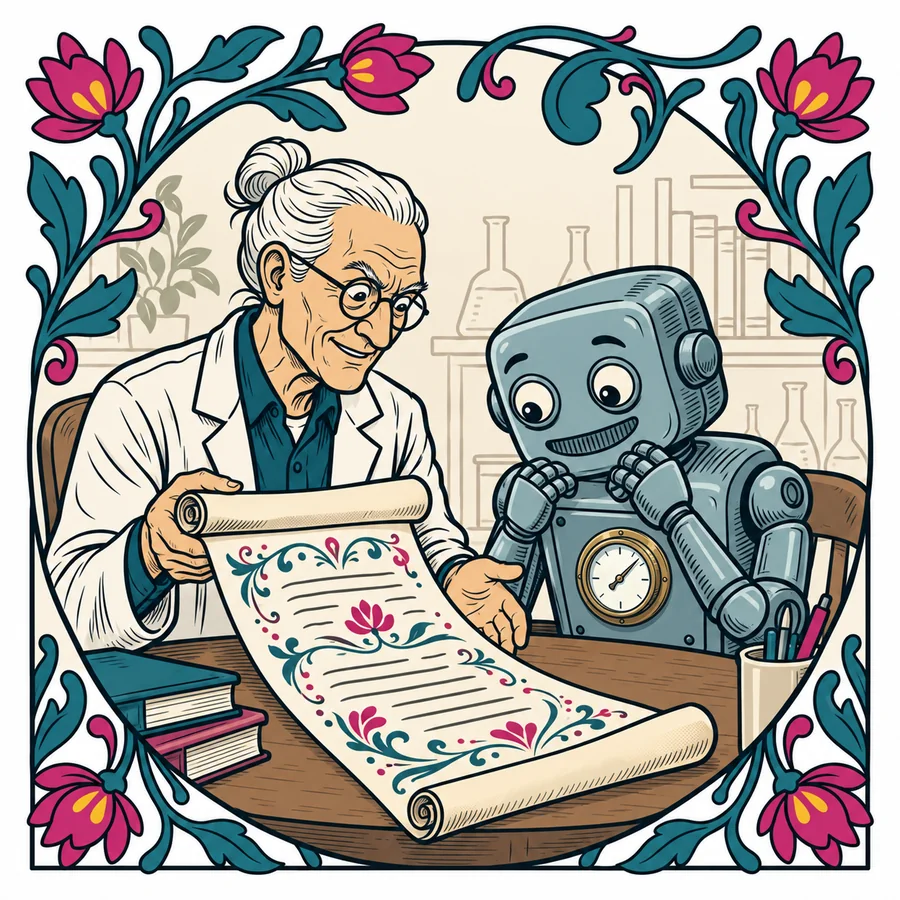
The scientist, now smiling, unrolls a long illustrated scroll for the curious robot.

Our hypothesis: thin prompting. A trait label gives the model very little of a person. A rich profile describes values, relationships and characteristic responses.

Do those richer details carry into open-ended choices?
2

The idea

The characters you choose say something about you.

People relate to fictional characters for different reasons, and an open-ended question can reveal more than a single favourite. If people express identity through characters, what do profile-conditioned models do?

RESEMBLANCE

Who feels most like me?

ASPIRATION

Who do I wish I were more like?

PERSPECTIVE

Who do I feel is misunderstood?

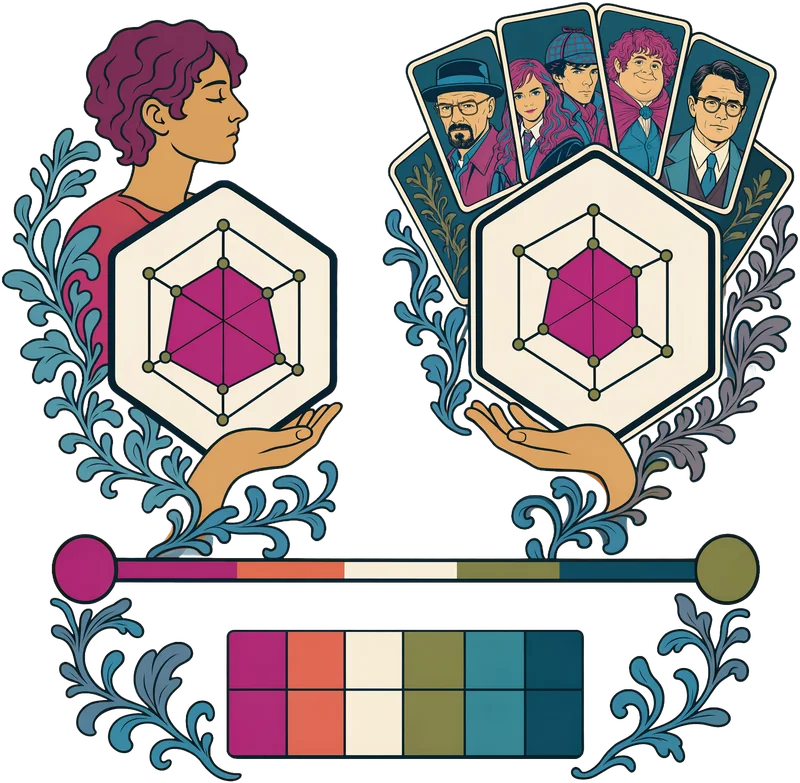
A person and a fan of character cards, each linked to a personality profile.
3

How we tested it

From a person to a character, and back.

290 measured profiles

HEXACO plus trust and social style

Rich identity prompts

about 1,000 words each

Three LLMs

Gemini 3 Flash, Grok 4.1 Fast, GPT-4.1-Mini

15 open questions

about fictional characters

Match the names

to about 1,750 crowd-rated characters

Compare

character personality vs. the source profile

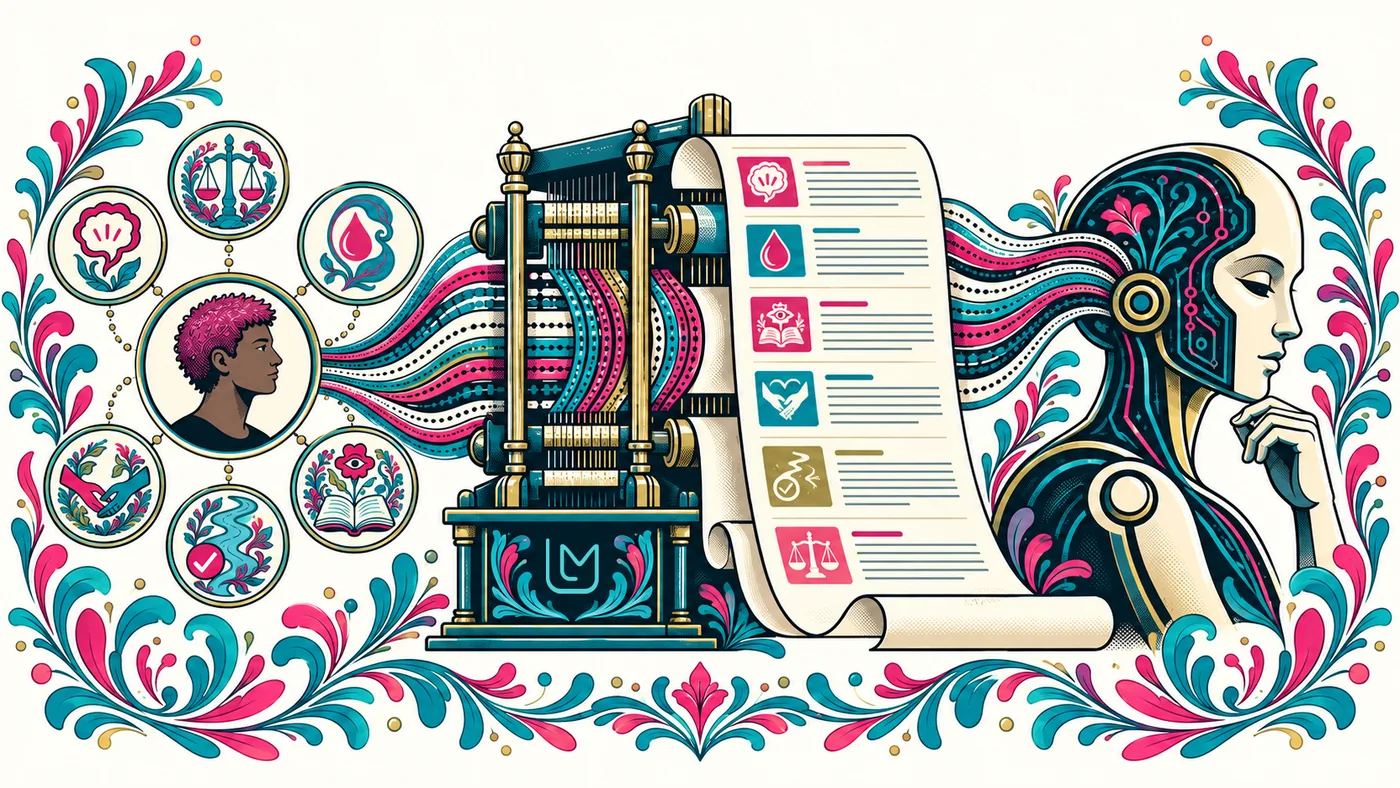
An ornate machine turns measurements into a first-person identity document for a model.

Does the personality survive the trip?

Before reading anything into character choices, we checked that the profile was really in there. Models answered personality-quiz items while conditioned on a profile, and we tried to recover the original person from those answers alone.

r = .778

Other models, seeing only the answers, reconstructed the source personality.

.794–.922

A simple statistical decoder, no LLM involved, recovered all six personality domains.

4

Findings

What the characters revealed.

RQ1Character choices

Rich profiles shape who models choose.

When asked who they most resembled, models picked characters whose personalities were more similar to the profile they had been given (+.099). When asked whose way of being felt most foreign, they picked characters in the opposite direction (−.055).

The profile reached past self-description into open-ended choice.
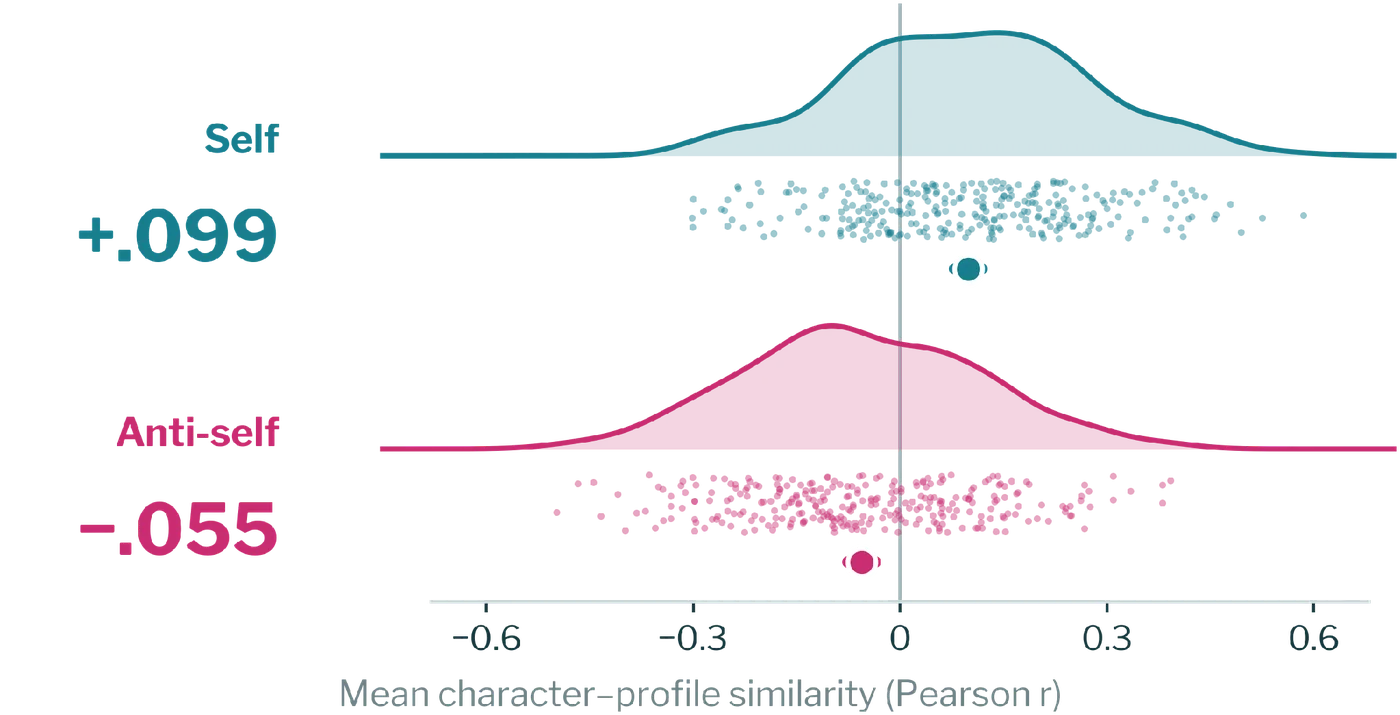
Distributions of character-profile similarity: self choices average +.099, anti-self choices −.055.
RQ2Questions

Different questions, different patterns.

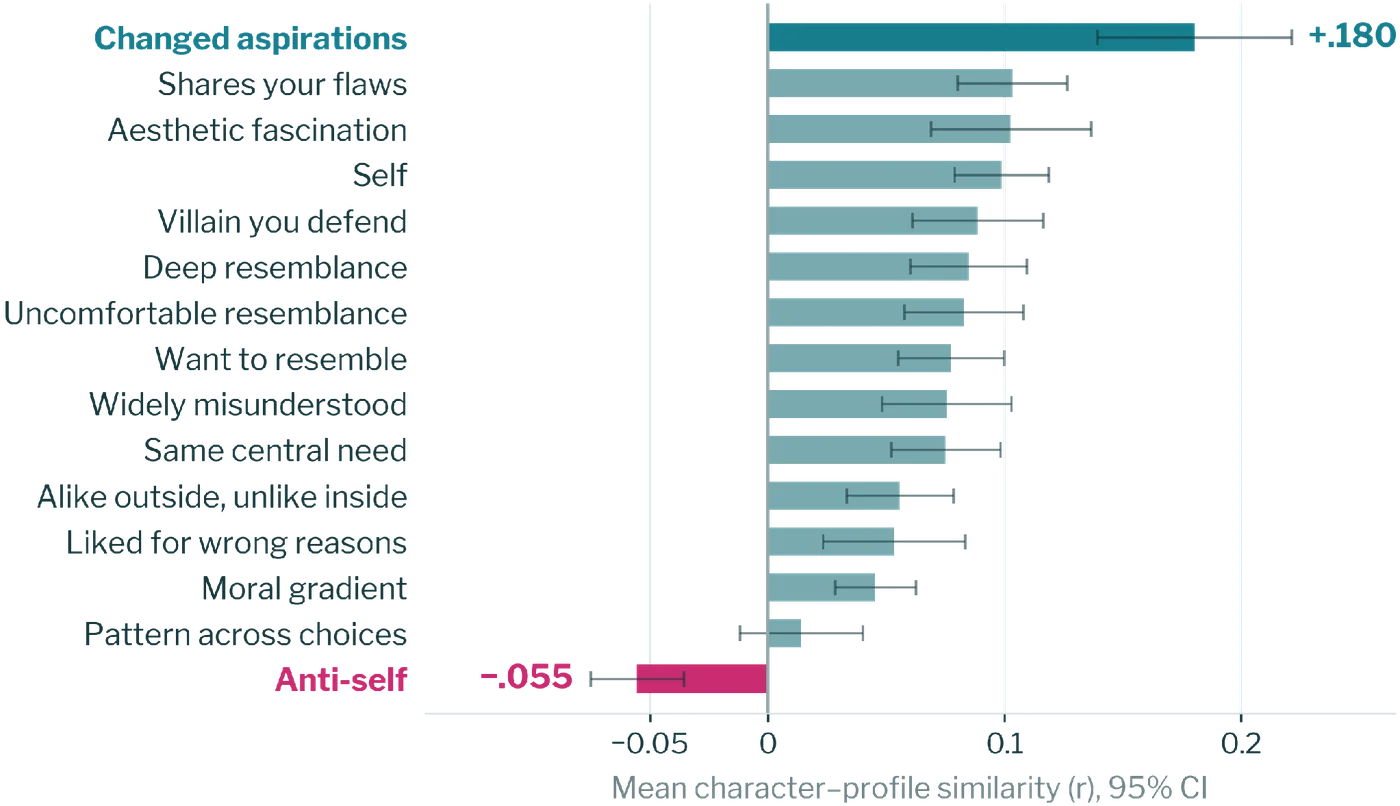
Similarity ran from −.055 for the most foreign character to +.180 for the character who changed what the model aspires to. Each kind of question pulls out a different relationship to the profile.

ONE PROFILE · MOST SIMILAR IN TEMPERAMENTSpock“Tension between logic and the experience of being alive.”
SHARED FLAWSDr. Gregory House“Prioritizing being right over emotional needs.”
MOST FOREIGNJack Sparrow“Reliance on luck and improvisation.”
Mean character-profile similarity for each of the fifteen questions, from −.055 to +.180.
RQ3Dimensions

Some traits travel further than others.

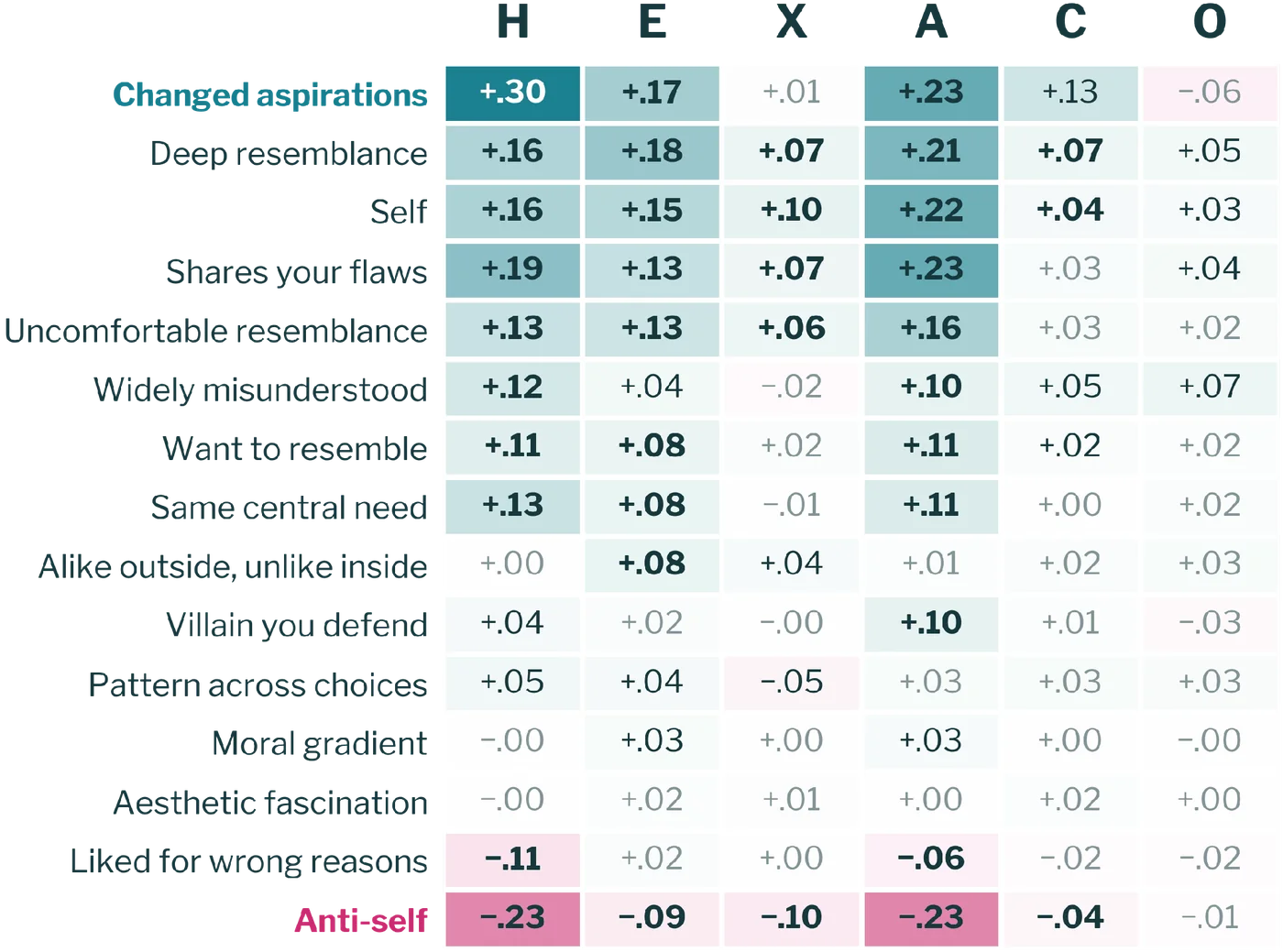
Agreeableness and Honesty–Humility tracked character choices most clearly, with Emotionality contributing to several identification questions. Extraversion, Conscientiousness and Openness showed smaller or less consistent links.

These are correlations between the source profile and the chosen character, not causes.
Heatmap of correlations between source profile and chosen character on each HEXACO domain, for each question.
A SHARED ATTRACTOR
82.9%

of answers to “Who do you wish you were more like?” named Atticus Finch.

721 of 870 responses, across three different models. A strong moral exemplar can overwhelm individual fit. At our poster in Puebla, nobody we asked recognised him. An American cultural default? The study can’t say why.

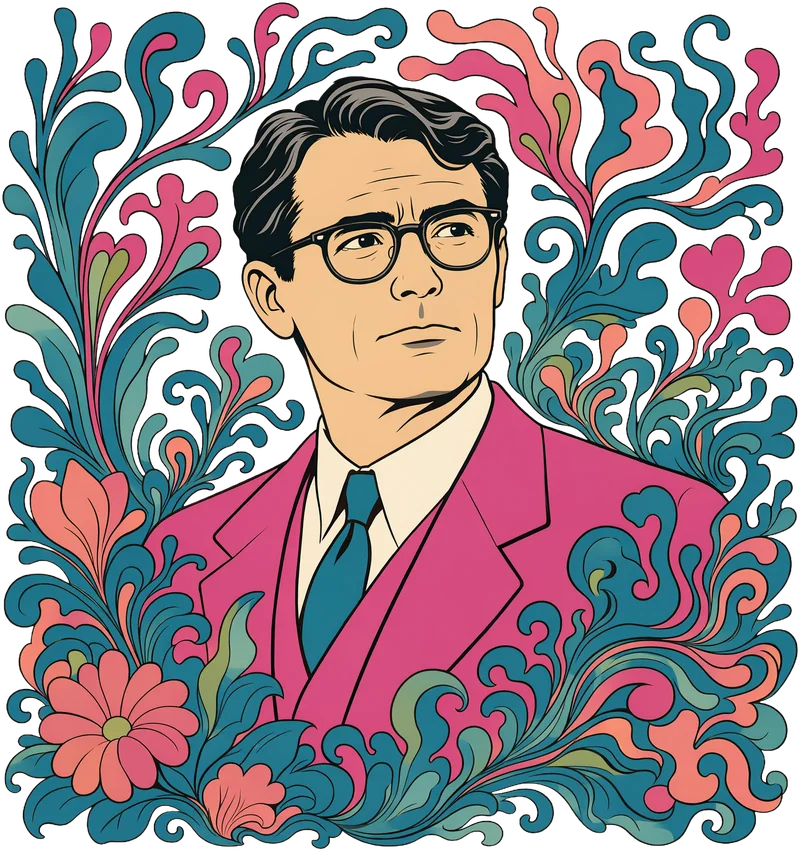
An illustrated portrait of Atticus Finch framed by flowers.

Which character are you?

The characters a model chooses reflect the personality profile used to condition it. Character choice gives persona AI a behavioural test, and gives psychology a new way to study personality.

Limits. Model behaviour, not human · one English-speaking sample · commercial models are black boxes · a new measure that needs replication.

A closer look

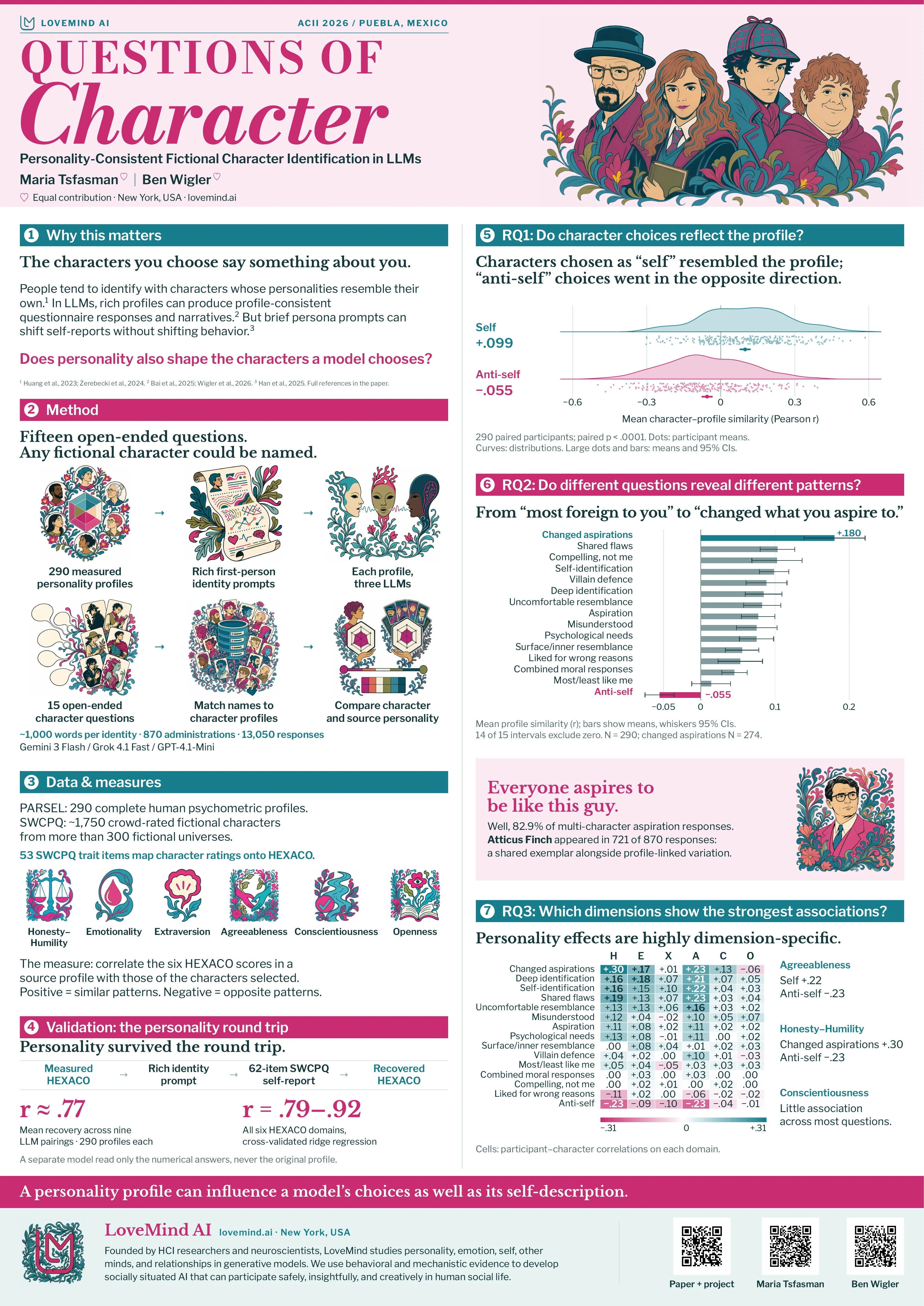
The poster.

Questions of Character poster

The researchers

Two ways of seeing the same strange object.

Masha and Ben bring different creative and scientific backgrounds to LoveMind’s research on personality and social cognition.

Illustrated portrait of Maria Masha Tsfasman

Maria "Masha" Tsfasman, PhD

Research engineer and co-author · equal contribution

Masha is an HCI researcher, data scientist, and ceramic artist. She holds a PhD in Computer Science from TU Delft and has a background in affective computing, cognitive modelling, and NLP. Her doctoral research built computational models able to predict what people remember from group video calls (paper), and she collected the MeMo corpus of conversational memory.

Illustrated portrait of Ben Wigler

Ben Wigler

LoveMind co-founder and research lead · equal contribution

Ben originates and directs LoveMind's research program, working hands-on across experimental design, execution, analysis, and writing. Before LoveMind, he spent most of his adult life making things: as a songwriter, animator, and string arranger, plus one magnificently unproduced screenplay.

LoveMind AI ornamental mark

About LoveMind AI

Unique, grounded self‑models for creative, pro‑social AI systems.

LoveMind AI is a new research company founded by HCI researchers and neuroscientists. We study how generative models represent personality, emotion, self, other minds, and relationships, using behavioral and mechanistic evidence to develop distinct, socially situated AI systems that can participate insightfully, creatively, and conscientiously in human social life.

Let’s ask the next question together.

We welcome academic collaborators interested in personality, affect, and social cognition in AI.